
If you have lost your job or had your hours reduced, you may be eligible to apply for unemployment benefits through the Connecticut Department of Labor (CTDOL).
Connecticut uses ReEmployCT for unemployment claims and related services. New claimants need to create a ReEmployCT account before filing their unemployment application. CTDOL advises people to file promptly rather than waiting for an official separation notice from their employer.
This guide explains how to file for unemployment in Connecticut, what information you may need, what happens after you submit your application, and what you need to do to continue receiving benefits.
Important: This is an independent informational guide and is not affiliated with the Connecticut Department of Labor. Always follow the instructions and requirements shown in your ReEmployCT account and the latest CTDOL guidance.
How to File for Unemployment in Connecticut
The basic process is:
- Create or access your ReEmployCT account.
- Start a new unemployment claim.
- Provide your personal and employment information.
- Answer questions about why you are unemployed.
- Review your application carefully.
- Submit your claim.
- Complete your weekly certifications if you continue claiming benefits.
- Complete any work-search requirements that apply to you.
CTDOL strongly encourages claimants to review the filing information before beginning because mistakes in an application can cause delays.
Step 1: Go to ReEmployCT
Connecticut’s unemployment system is ReEmployCT. If you are filing for unemployment for the first time and do not already have a ReEmployCT account, you will need to create one.
CTDOL says all unemployment filers must have a ReEmployCT account. The current system was established on July 5, 2022, and people who used the older unemployment system need new ReEmployCT credentials.
If you already have an account, sign in using your existing ReEmployCT credentials.
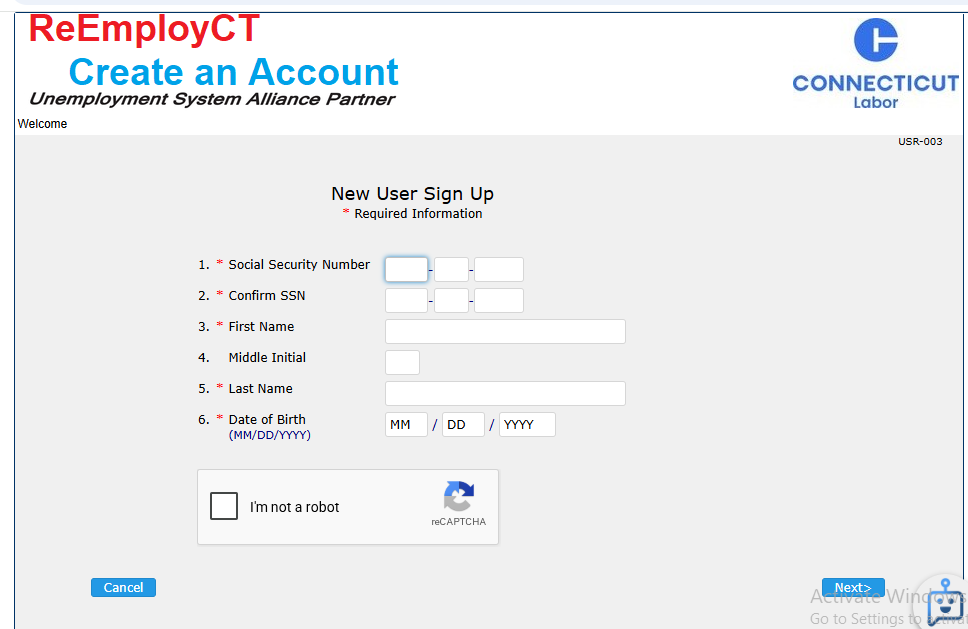
Step 2: Create a ReEmployCT Account if You Need One
If you do not already have a ReEmployCT account, follow the account-creation instructions provided by CTDOL.
The account setup process can require information such as:
- Social Security number
- Full name
- Date of birth
- Email address
- User ID
- Password
- Security questions
You should enter your information carefully. A mistake in your personal information or employment history can lead to additional questions or delays during the claims process.
What if I used the old Connecticut unemployment system? If you previously had an unemployment account before ReEmployCT was introduced, do not assume your old username and password will work.
CTDOL states that users of the previous system needed to create new ReEmployCT credentials.
Step 3: Start a New Unemployment Claim
After accessing your ReEmployCT account, select the option for starting a new unemployment claim. The current CTDOL claimant guidance distinguishes between filing a new claim and filing a weekly certification.
If you are filing for unemployment for the first time, you need to start a new claim. If you already have an active continuous claim, you generally use Weekly Certification instead of starting another claim.
This distinction is important because starting a duplicate claim when you only need to file your weekly certification can create unnecessary confusion.
Step 4: Provide Your Personal Information
The application will ask for information needed to establish your unemployment claim. Make sure the information you enter matches your official records.
You may be asked for information such as:
- Your name
- Address
- Contact information
- Social Security number
- Date of birth
- Employment information
- Banking or payment information
- Other information needed to determine your eligibility
Review each section before moving forward. If your address, phone number, or other contact information changes after filing, update your information as instructed by CTDOL. The department says claimants can update their address through ReEmployCT.
Step 5: Provide Your Employment History
Your employment history is an important part of your unemployment application. Be prepared to provide information about your recent employers, including information such as:
- Employer names
- Dates of employment
- Work location
- Reason you stopped working
- Wages or earnings
- Other employment information requested by the system
Try to enter the information accurately. Do not leave out an employer simply because you believe that employer is not responsible for your unemployment.
CTDOL explains that an unemployment claim is based on your overall work history and that multiple employers may be used when determining eligibility.
Step 6: Explain Why You Are Unemployed
One of the most important parts of the application is explaining why you are no longer working. Your reason for separation can affect your eligibility.
For example, unemployment may result from:
- A layoff
- Lack of work
- A reduction in hours
- A business closure
- Being discharged
- Voluntarily leaving a job
- A temporary work separation
- Other circumstances affecting your employment
Answer the questions truthfully and provide the information requested. Do not choose an answer simply because you think it will guarantee benefits.
CTDOL reviews claims individually, and some situations require additional fact-finding before an eligibility determination is made.
Step 7: Answer the Eligibility Questions
The application will ask questions used to determine whether you may qualify for unemployment benefits.
Connecticut’s unemployment eligibility review generally considers factors such as your recent wages, why you are no longer working, and whether you are able and available to work.
You may need to answer questions concerning:
- Your employment
- Your wages
- Your reason for unemployment
- Your ability to work
- Your availability for work
- Your authorization to work
- Other circumstances that could affect eligibility
Answer every question accurately. If CTDOL needs additional information, respond as quickly as possible.
Step 8: Review Your Application
Before submitting your claim, carefully review the information you entered.Pay particular attention to:
- Your name
- Address
- Social Security information
- Employer information
- Employment dates
- Reason for separation
- Earnings
- Contact information
- Payment information
Small errors can create delays. CTDOL specifically warns that errors in an unemployment application can cause significant delays in receiving benefits.
Step 9: Submit Your Connecticut Unemployment Claim
Once you have reviewed the application, submit it through ReEmployCT. Keep any confirmation information provided after submission.
You should also check your ReEmployCT account regularly for messages, requests for information, determinations, or other updates.
Should I wait for my employer to send me a separation letter? Generally, no.
CTDOL advises claimants to file immediately and says you do not need to wait for an official unemployment notice or separation packet before filing. The effective date of the claim depends on when the claim is completed.
Waiting to receive paperwork from your former employer could delay the filing of your claim.
When Should I File for Unemployment in Connecticut?
You should generally file as soon as you become unemployed or your circumstances otherwise make you eligible to file.
CTDOL says to file your claim immediately and warns that retroactive payments are typically not allowed without a determination regarding eligibility for those earlier weeks.
For this reason, do not intentionally wait several weeks before submitting your initial claim.
What Information Do I Need to File for Unemployment?
Having your information ready can make the application easier.
Depending on your circumstances, you may need information such as:
Personal information
Have information such as your:
- Social Security number
- Name
- Date of birth
- Mailing address
- Phone number
- Email address
Employment information
You may need:
- Employer names
- Employer addresses
- Employment dates
- Reason for separation
- Wage information
- Information about other recent employers
Payment information
If you choose electronic payment, you may need the appropriate bank-account information requested by ReEmployCT.
Do not provide your banking information to an unofficial website or person claiming they can file your unemployment application for you.
Can I File for Unemployment If I Was Laid Off?
A layoff caused by a lack of work can be a qualifying circumstance, but filing a claim does not automatically guarantee benefits.
CTDOL reviews the circumstances of each claim.
The department’s unemployment guide lists layoffs or reductions in hours caused by an employer’s lack of work among circumstances that may qualify for benefits.
You should still submit an application if you believe you may qualify.
Can I File for Unemployment If I Quit My Job?
You can submit an unemployment claim after leaving a job, but whether you qualify depends on the circumstances.
CTDOL examines the reason for the separation.
Its guidance identifies some situations in which leaving employment may qualify and other circumstances that may result in a denial.
If you quit your job, explain the circumstances accurately in your application.
Do not leave out important information because you are concerned it might affect your claim.
Can I File for Unemployment If I Was Fired?
You can file a claim after being discharged, but eligibility depends on the circumstances surrounding the separation.
CTDOL may investigate the reason for the discharge and request information from you and your former employer.
For example, CTDOL’s unemployment guide identifies discharge for misconduct as one circumstance that may prevent a claimant from receiving benefits.
The fact that you were fired does not by itself answer whether you qualify.
Can I File If My Work Hours Were Reduced?
A reduction in hours can potentially result in partial unemployment eligibility.
If you are working fewer hours than before, report your employment and earnings accurately.
Do not assume that having a part-time job automatically prevents you from filing.
Your eligibility and benefit amount depend on your circumstances and the applicable Connecticut rules.
What Happens After I File for Unemployment?
Submitting the application is only the beginning of the process.
After filing, CTDOL may review your claim and may request additional information.
Some claims are straightforward, while others require additional fact-finding.
CTDOL says most claims are processed within about 10 days, although claims involving other states, federal employment, separation hearings, wage investigations, employer appeals, or other issues can take longer.
Check your ReEmployCT account for updates and respond promptly when CTDOL requests information.
Do I Need to File a Weekly Claim After My Initial Application?
Yes, if you continue to claim unemployment benefits. Your initial application is different from your weekly certification.
After establishing your claim, you generally need to submit a weekly certification for each week you want to receive benefits.
Connecticut’s claim week runs from Sunday through Saturday, and weekly certifications are due by 11:59 p.m. Saturday for the week being claimed.
For active continuous claims, CTDOL instructs claimants to select Weekly Certification in ReEmployCT rather than starting another unemployment claim.
See our separate guide to Connecticut Unemployment Weekly Certification for the complete weekly filing process.
Do I Have to Search for Work After Filing?
Generally, yes. Connecticut generally requires unemployment claimants to search for work each week unless an approved exemption applies.
The current CTDOL work-search requirement generally includes at least three qualifying activities per week, with at least one employer contact.
You also report your work-search activities as part of your weekly certification.
See our separate Connecticut Unemployment Work Search guide for examples of qualifying activities and record-keeping requirements.
Do I Have to Report Wages After Filing?
Yes. If you work while receiving unemployment benefits, you must report your earnings as required.
CTDOL says claimants must report gross earnings, not net earnings, and earnings should be reported for the week in which the work was performed—even if the claimant has not yet received the paycheck.
For example, if you worked 20 hours at $20 per hour during a claim week:
20 × $20 = $400 gross earnings
The amount you eventually receive after taxes is not the amount used for this gross-earnings report.
What If I Do Not Have a Computer?
CTDOL provides assistance for people who have difficulty filing online.
Its claimant FAQ indicates that people without access to a computer can seek assistance through an American Job Center or the Consumer Contact Center.
The Connecticut unemployment system is designed for online filing, but you should contact CTDOL if you need help accessing the filing process.
What If I Make a Mistake on My Application?
If you realize that you entered incorrect information, do not simply ignore the error.
The appropriate next step depends on what information is incorrect and whether the claim has already been processed.
For significant errors involving your employment history, wages, separation information or identity, contact CTDOL and follow its instructions.
Providing incorrect information intentionally can create serious problems with an unemployment claim.
What If My Claim Is Delayed?
A delayed claim does not necessarily mean that you have been denied.
CTDOL says claims can take longer to process when they involve issues such as:
- Employment in another state
- Federal employment
- Separation hearings
- Wage investigations
- Employer appeals
- Other eligibility questions
If CTDOL requests additional information, respond as quickly as possible.
Continue completing required weekly certifications while your claim is being reviewed unless CTDOL tells you otherwise.
What If My Unemployment Claim Is Denied?
If CTDOL determines that you are not eligible for benefits, you may have the right to appeal the decision.
Do not ignore a denial notice.
Read the determination carefully and check the instructions and deadline for appealing.
Connecticut provides an unemployment appeals process, and appeals can be filed through ReEmployCT as well as through other methods identified by the Appeals Division.
We will cover the Connecticut unemployment appeal process in a separate article in this topic cluster.
What If I Already Had an Unemployment Claim?
If you previously filed a Connecticut unemployment claim, do not automatically start a completely new claim.
The appropriate action can depend on the status of your existing claim.
CTDOL says that if you have an active continuous claim, you should use Weekly Certification. If you have reached the end of your benefit year or need to reopen a claim after having been employed, you may need to use the Unemployment Claim option.
If you are unsure which option applies, check your ReEmployCT account or contact CTDOL.
How Long Can You Receive Connecticut Unemployment Benefits?
Generally, eligible unemployed workers may receive up to 26 weeks of unemployment benefits, although specific circumstances and any applicable federal programs can affect the number of weeks available.
The number of weeks available to you is not determined simply by how long you have been unemployed.
Your claim and eligibility circumstances determine what benefits you may receive.
Tips for Filing a Connecticut Unemployment Claim
File promptly
Do not wait unnecessarily to submit your initial claim.
Double-check your information
Review your employment history, dates, wages and separation information before submitting.
Be truthful
Answer every question based on what actually happened.
Keep records
Save confirmation numbers, correspondence, and other important information related to your claim.
Check your account
Review ReEmployCT regularly for notices and requests for information.
Continue filing weekly
Once your claim is established, continue submitting weekly certifications when you are claiming benefits.
Keep searching for work
If you are subject to the work-search requirement, complete and document your required activities every week.
Report earnings
Report gross earnings for the appropriate week if you perform work while claiming benefits.
Connecticut Unemployment Filing Checklist
Before submitting your claim, make sure you have:
- Created your ReEmployCT account if necessary.
- Gathered your personal information.
- Gathered information about your recent employers.
- Reviewed your employment dates.
- Identified the correct reason for your separation.
- Gathered relevant wage information.
- Entered your contact information correctly.
- Reviewed your application for errors.
- Submitted your claim.
- Saved your confirmation information.
- Checked ReEmployCT for follow-up requests.
After your claim is established:
- Complete weekly certifications.
- Complete required work-search activities.
- Report gross earnings accurately.
- Respond to CTDOL requests for information.
- Monitor your ReEmployCT account.
Frequently Asked Questions
How do I file for unemployment in Connecticut?
You can file a Connecticut unemployment claim online through the ReEmployCT system. If you do not already have a ReEmployCT account, you will need to create one before starting your claim.
When should I file for unemployment in CT?
CTDOL advises people to file immediately rather than waiting for an official separation notice. Retroactive payments are generally not allowed without an eligibility determination for those earlier weeks.
Do I need a separation letter to file for unemployment?
No. CTDOL says you have the right to file for unemployment whether or not you receive a separation packet or separation letter.
Can I file for unemployment in Connecticut online?
Yes. ReEmployCT is Connecticut’s online unemployment tax and benefits system and is used for unemployment claims and weekly certifications.
How long does a Connecticut unemployment claim take to process?
CTDOL says most claims are processed within about 10 days, but some claims can take longer because of issues such as wage investigations, separation hearings, other-state employment or employer appeals.
Do I have to file every week after applying for unemployment?
If you continue to claim benefits, you generally need to complete a weekly certification for each week you are requesting benefits. Connecticut claim weeks run Sunday through Saturday.
Do I have to search for work after applying?
Generally, yes, unless an approved exemption applies. Connecticut generally requires at least three qualifying work-search activities per week, including at least one employer contact.
Can I file if I was fired?
You can submit a claim, but eligibility depends on the circumstances surrounding your separation. CTDOL may investigate the reason for the discharge before making an eligibility determination.
Can I file if I quit my job?
You can file a claim, but whether you qualify depends on why you left the job and the circumstances surrounding your separation.
Can I receive unemployment while working part-time?
Potentially. Working part-time does not automatically prevent someone from receiving unemployment benefits, but you must report your work and gross earnings accurately.
What happens after I submit my Connecticut unemployment claim?
CTDOL reviews the claim and may request additional information. Once your claim is established, you generally need to continue filing weekly certifications and meeting other eligibility requirements to receive ongoing benefits.
Conclusion
Filing for unemployment in Connecticut is only the first step in the unemployment process. Start your claim promptly through ReEmployCT, provide accurate information about your employment and separation, and review your application carefully before submitting it.
After filing, remember that maintaining your claim generally requires additional steps. You may need to complete weekly certifications, conduct your required work search, report earnings, and respond to CTDOL requests for information.
The most important thing is to keep your information accurate and pay attention to the deadlines and instructions associated with your claim.
For current procedures, always check your ReEmployCT account and the Connecticut Department of Labor because online processes and unemployment requirements can change.